Field Notes
Phytase Stability in Pelleted Feed | Processing Guide
A practical B2B guide to protecting phytase performance through conditioning, pelleting, cooling, storage, and feed formulation decisions.
A practical B2B guide to protecting phytase performance through conditioning, pelleting, cooling, storage, and feed formulation decisions.
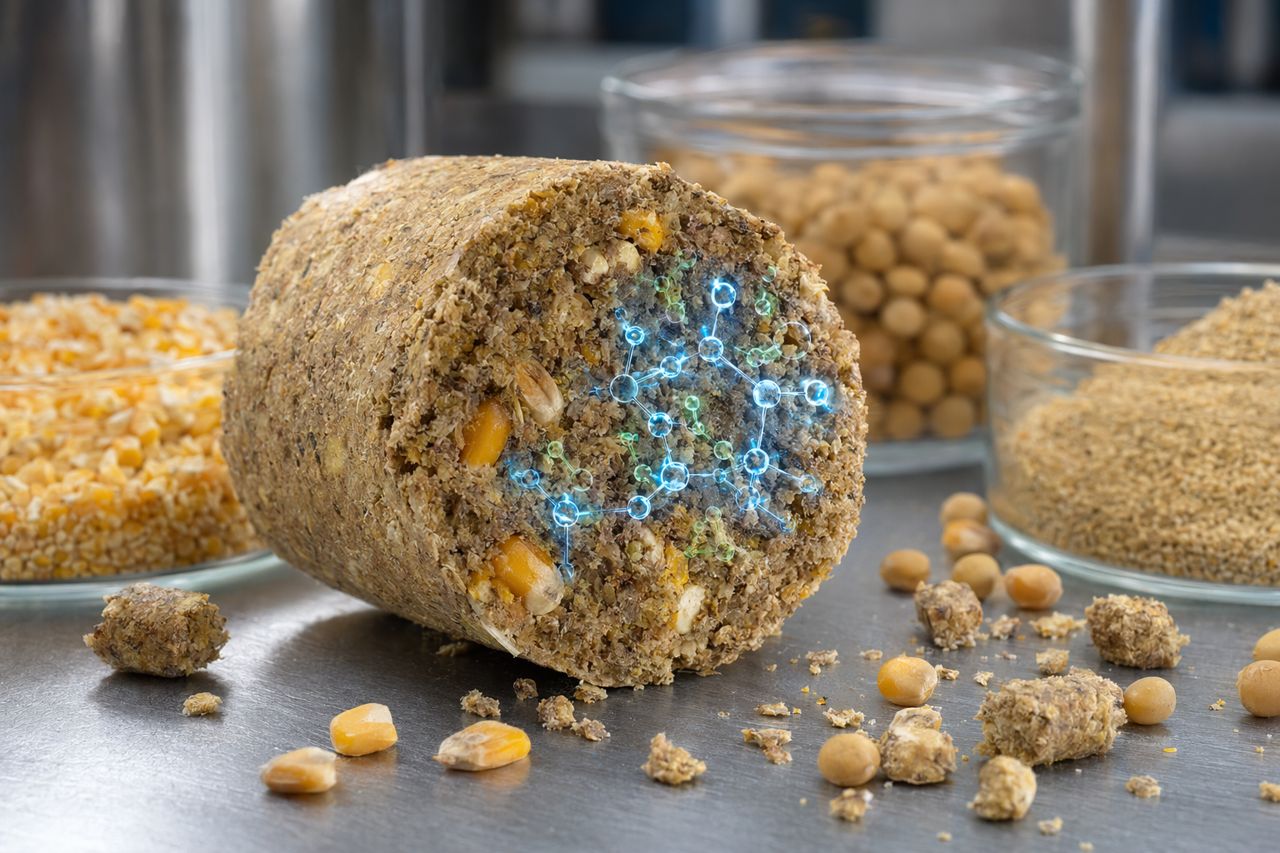
Pelleting improves feed handling, density, hygiene, and intake consistency. It can also expose phytase to heat, moisture, pressure, shear, and short-term pH changes that reduce the nutrient-release value a nutritionist expected at formulation.
For feed mills and integrators, the question is not simply whether phytase is “heat stable.” The commercial question is whether the selected phytase, application method, and pelleting profile preserve enough functional performance to support the phosphorus, calcium, amino acid, and energy contributions assigned in the feed matrix.
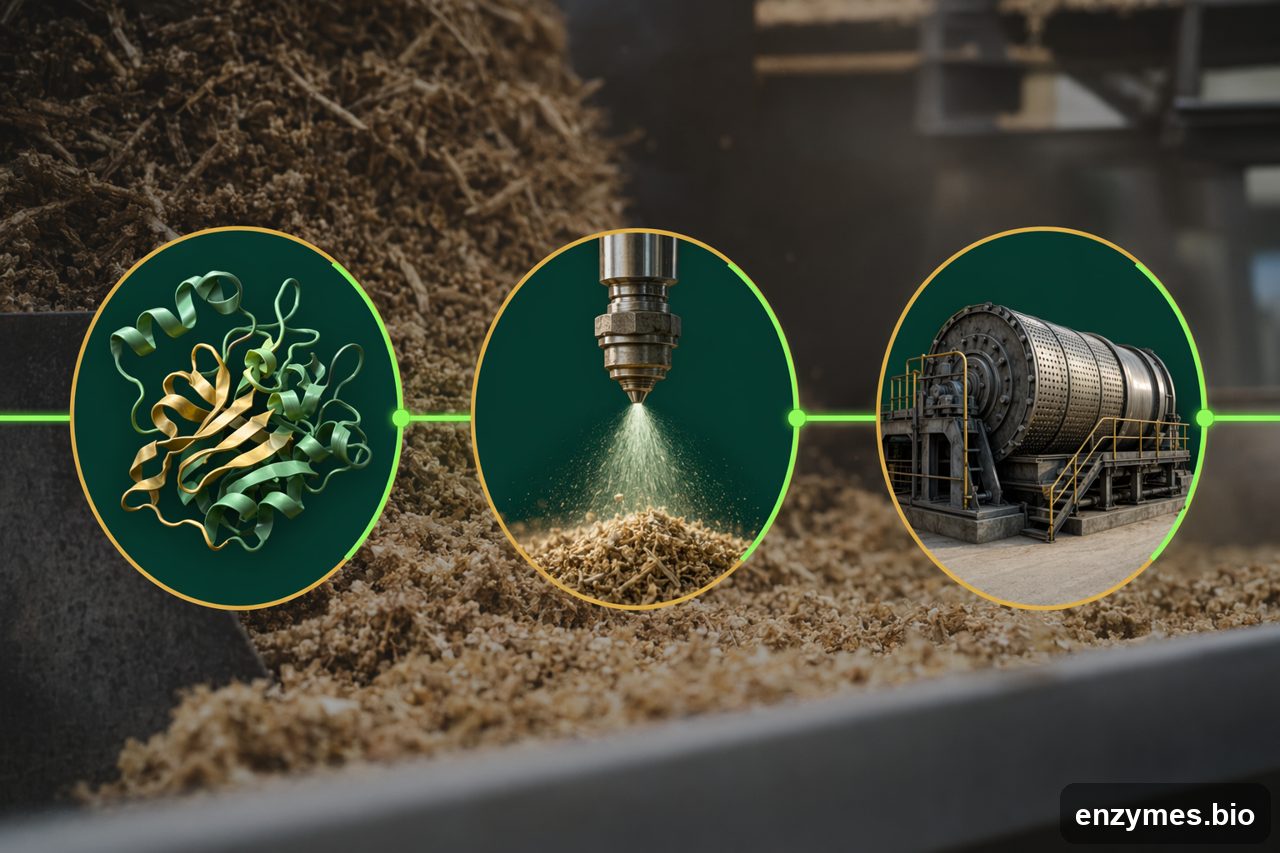
This page outlines the processing variables that matter, the specification questions buyers should ask, and the controls that help protect phytase value in pelleted feed.
Phytase releases phosphorus and other nutrients bound in phytate. In poultry, swine, aquaculture, and other monogastric diets, this can help formulators:
If pelleting reduces phytase recovery more than expected, the formulated nutrient release may not be delivered in the finished feed. That creates a gap between the diet on paper and the diet consumed by the animal.
Phytase is a protein catalyst. Like other enzymes, it has a three-dimensional structure that must remain intact enough to function. Pelleting can challenge that structure through several linked stressors.
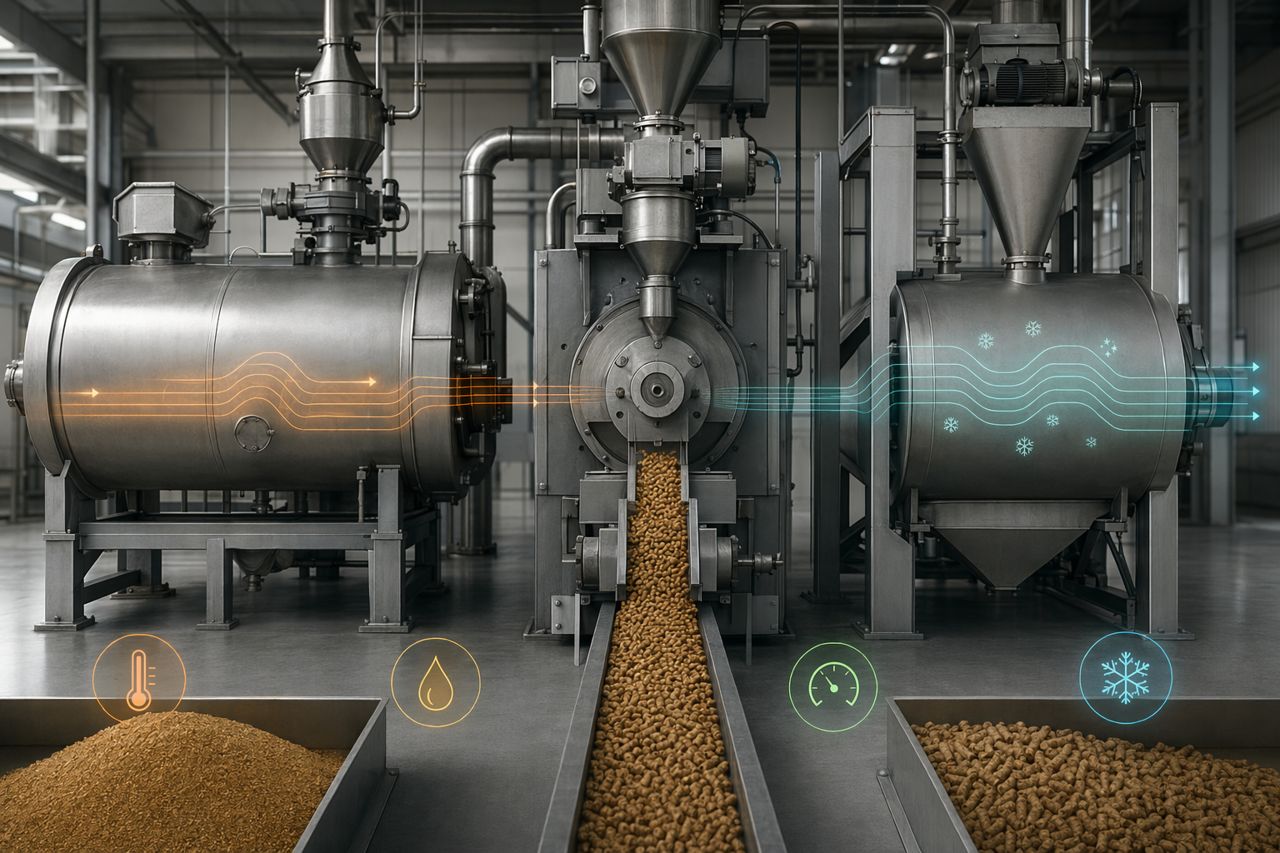
Conditioning and die friction raise feed temperature. Heat exposure is especially important when it is combined with moisture and residence time. A short, controlled exposure may be manageable for a stable product; prolonged or uneven exposure can create avoidable loss.
Steam is not only a heat source. It changes the hydration state of feed particles and enzyme carriers. Wet pockets, poor steam separation, or inconsistent conditioning can create local environments that are harsher than the average process reading suggests.
Compression through the die can create mechanical stress. Die design, roll setting, throughput, and formulation texture all influence the severity of that stress.
Stability does not end at the die. Slow cooling, retained moisture, fines recycling, hot storage bins, and long transport times can continue to affect enzyme performance after pellets leave the press.
A phytase product may be intrinsically robust, coated for thermal protection, applied after pelleting, or used in a process designed to minimize enzyme stress. The best choice depends on the mill, diet type, conditioning target, line layout, and quality-control capability.
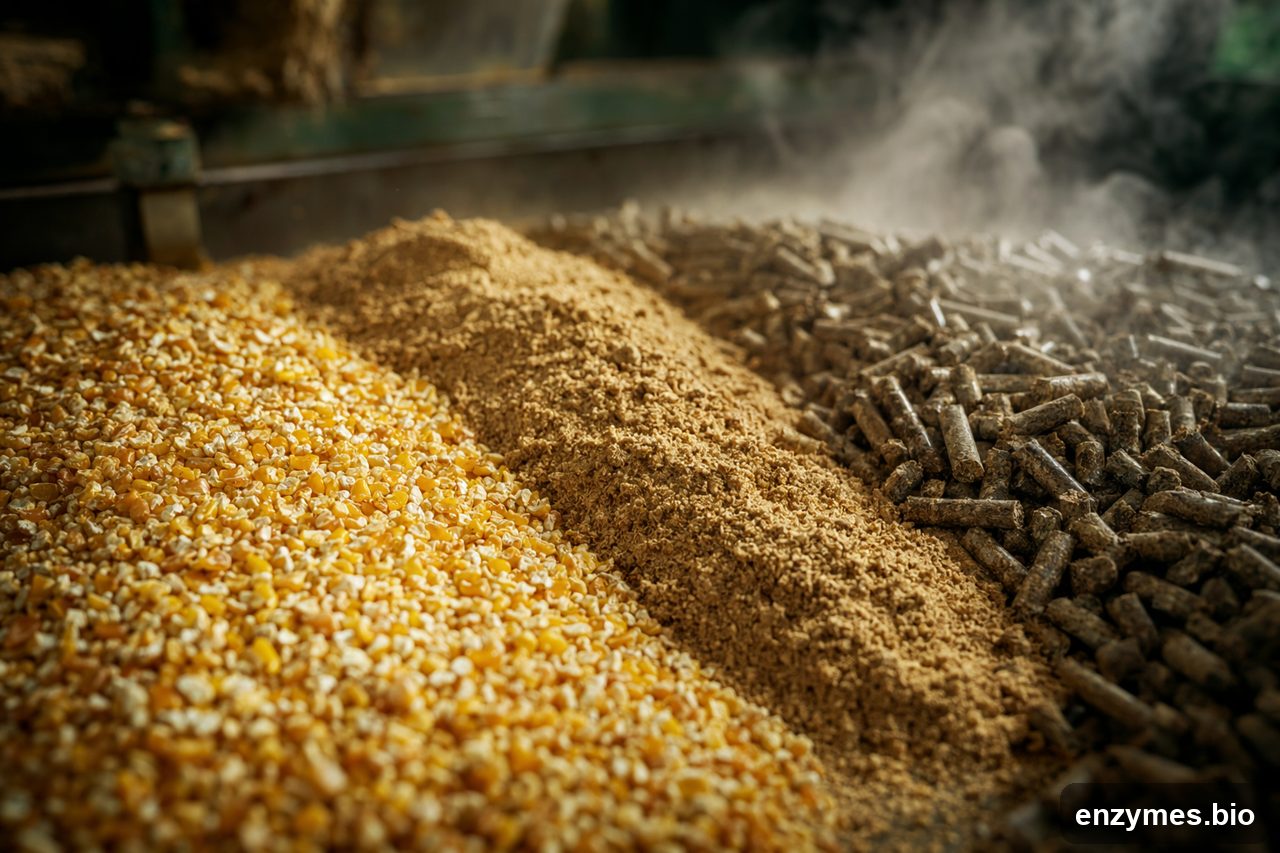
Three levers usually determine the final result:
Dry phytase addition at the mixer is operationally simple and commonly used. It works best when the phytase is selected for the mill’s actual thermal profile and when mixing is consistent.
Buyer considerations:
Dry addition is often the most practical route when mills want standard handling, fewer liquid systems, and clear batch accountability.
Coating technologies are used to protect enzyme structure during conditioning and pelleting. A good coating must balance two requirements: protect during processing, then allow release in the animal’s digestive tract.
Commercial evaluation should focus on:
Coating is not a substitute for process control. Excessive heat, high moisture, or long residence time can still reduce recovery.
Post-pellet liquid application can reduce thermal exposure because phytase is applied after the press and cooler. This approach is attractive for high-temperature processes or mills running multiple enzyme programs.
It requires strong liquid-application control:
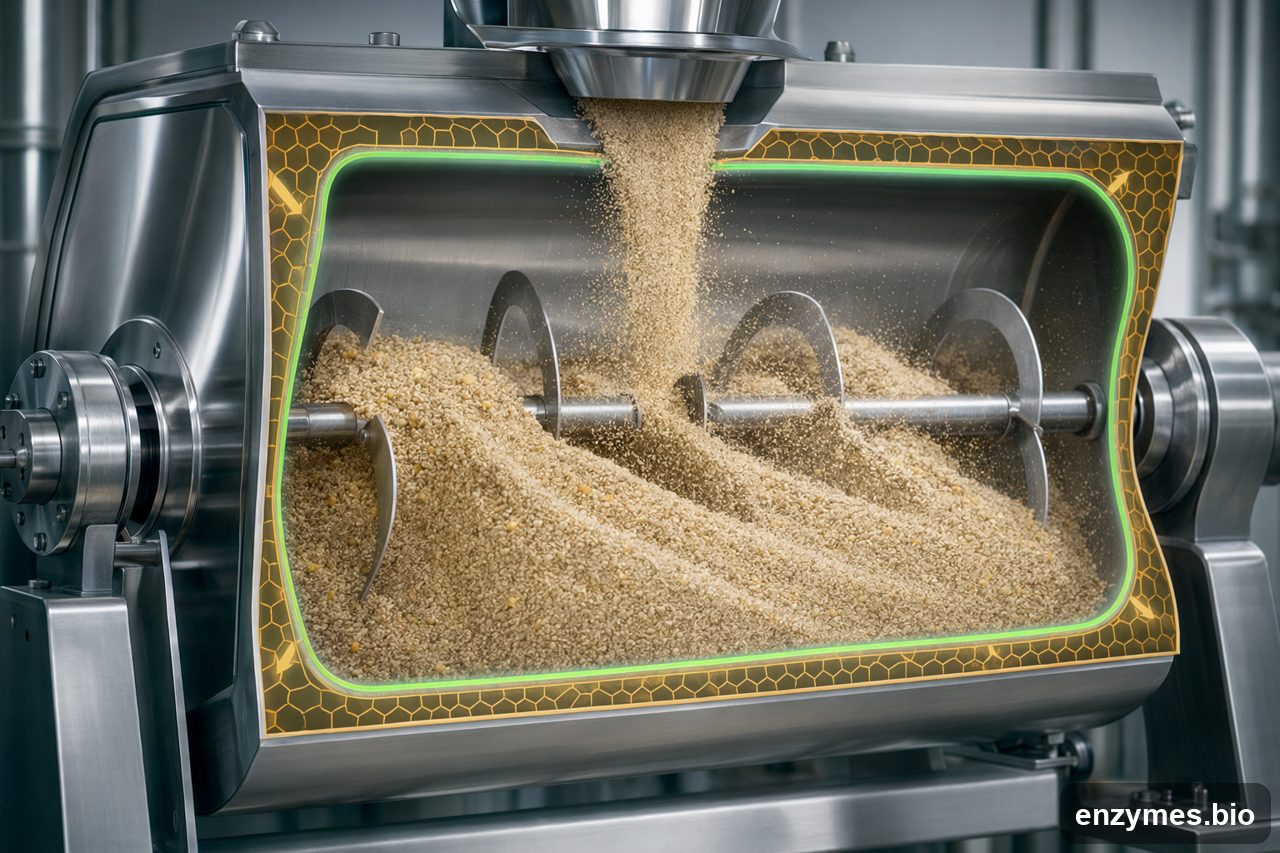
Liquid systems can be highly effective, but only when engineering and maintenance standards are reliable.
Stability improves when the mill treats phytase as a functional nutrient input, not as a commodity micro-ingredient.
When sourcing phytase for pelleted feed, procurement and technical teams should compare more than price per kilogram. Ask for information that reflects commercial use.
Recommended questions:
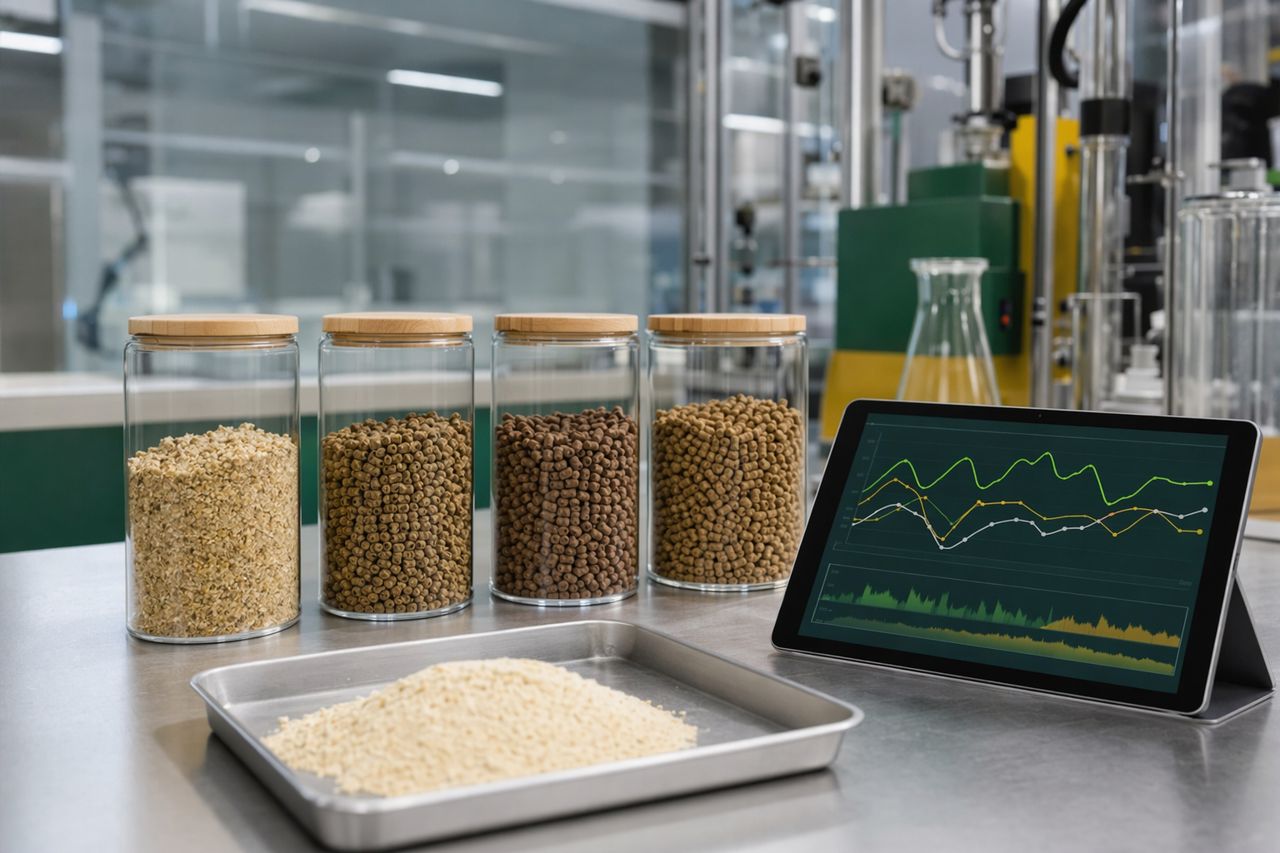
A useful phytase stability trial should reflect real production, not only ideal laboratory handling.
A practical trial plan includes:
The strongest trials involve nutrition, production, quality, and procurement teams together. Pelleting stability is cross-functional.
Phytase economics depend on predictable nutrient release. If a nutritionist assigns phosphorus, calcium, amino acid, or energy value to phytase, finished-feed recovery must be dependable enough to justify those credits.
Stable phytase use can support:
The financial value is strongest when the enzyme, pelleting process, and formulation matrix are aligned.
Average readings may hide spikes, wet steam pockets, or uneven feed flow. Trend data and operator observations matter.
Coating improves protection, but it has limits. Severe heat, moisture, or mechanical stress can still reduce performance.
It avoids much of the pelleting heat, but liquid distribution, pellet temperature, storage, and dosing accuracy become critical.
Matrix values should reflect species, diet composition, enzyme selection, application method, and actual process conditions.
Inosira supports phytase sourcing decisions around technical fit and commercial value. For pelleted feed programs, the key evaluation areas are:
The objective is simple: protect phytase function from mixer to animal, so the feed delivers the value the formulation promises.
If you are evaluating phytase for pelleted feed, share your species, feed type, process route, and target application method. Inosira will respond with commercially relevant options and pricing guidance.
Tell us your application and volume — we reply with pricing and lead time.