Phytase in Extrusion and Aquafeed Processing | Heat, Retention, and Formulation Value
Practical guidance for using phytase in extruded feeds and aquafeed: heat exposure, post-extrusion application, mineral matrix value, phosphorus release, and processing controls.
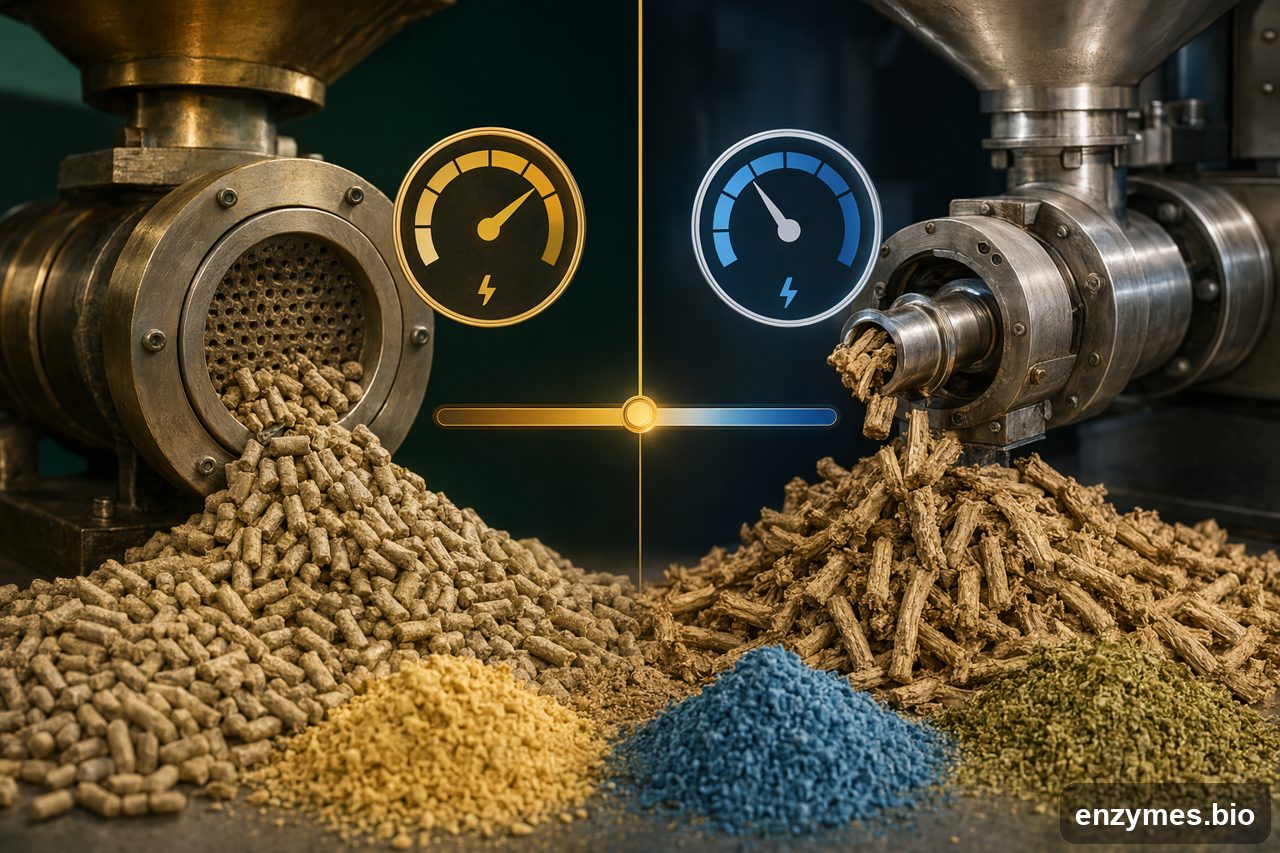
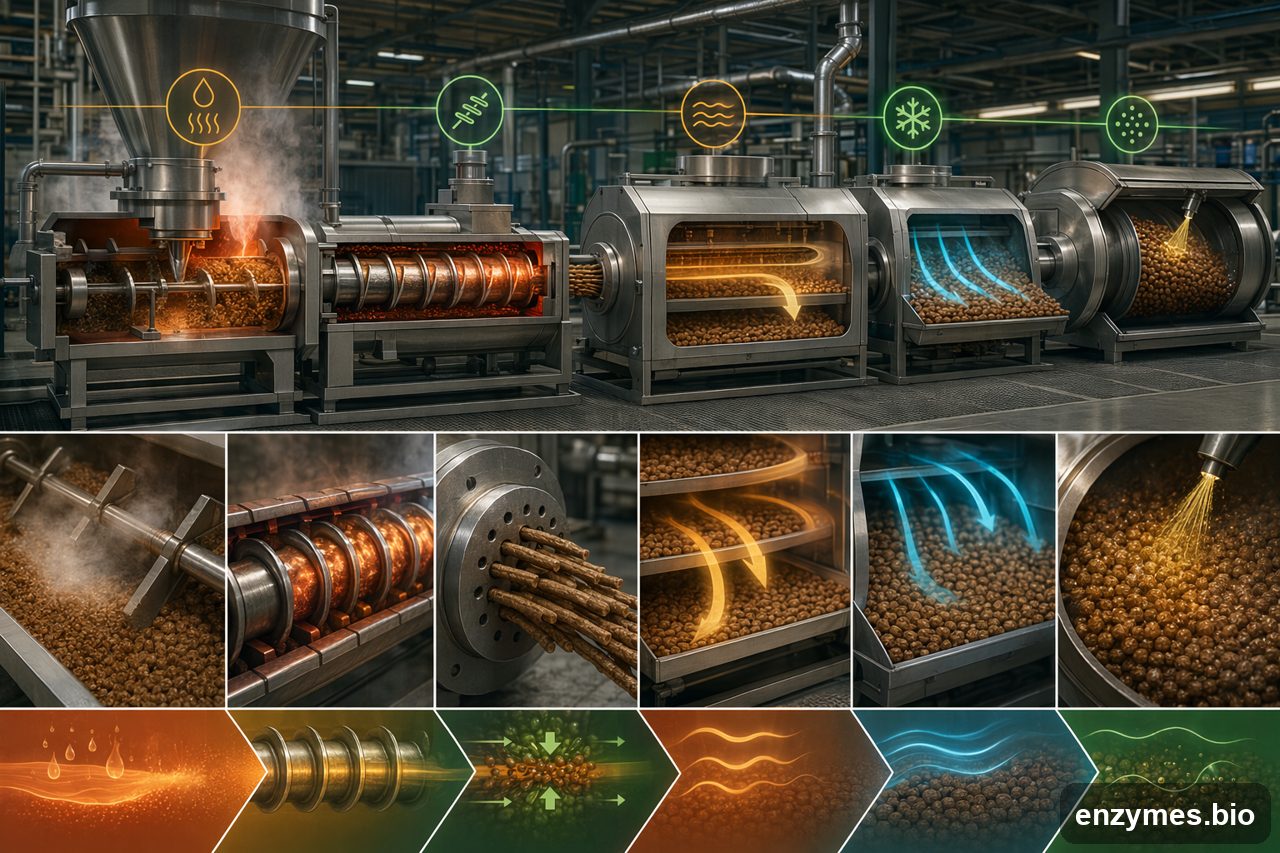
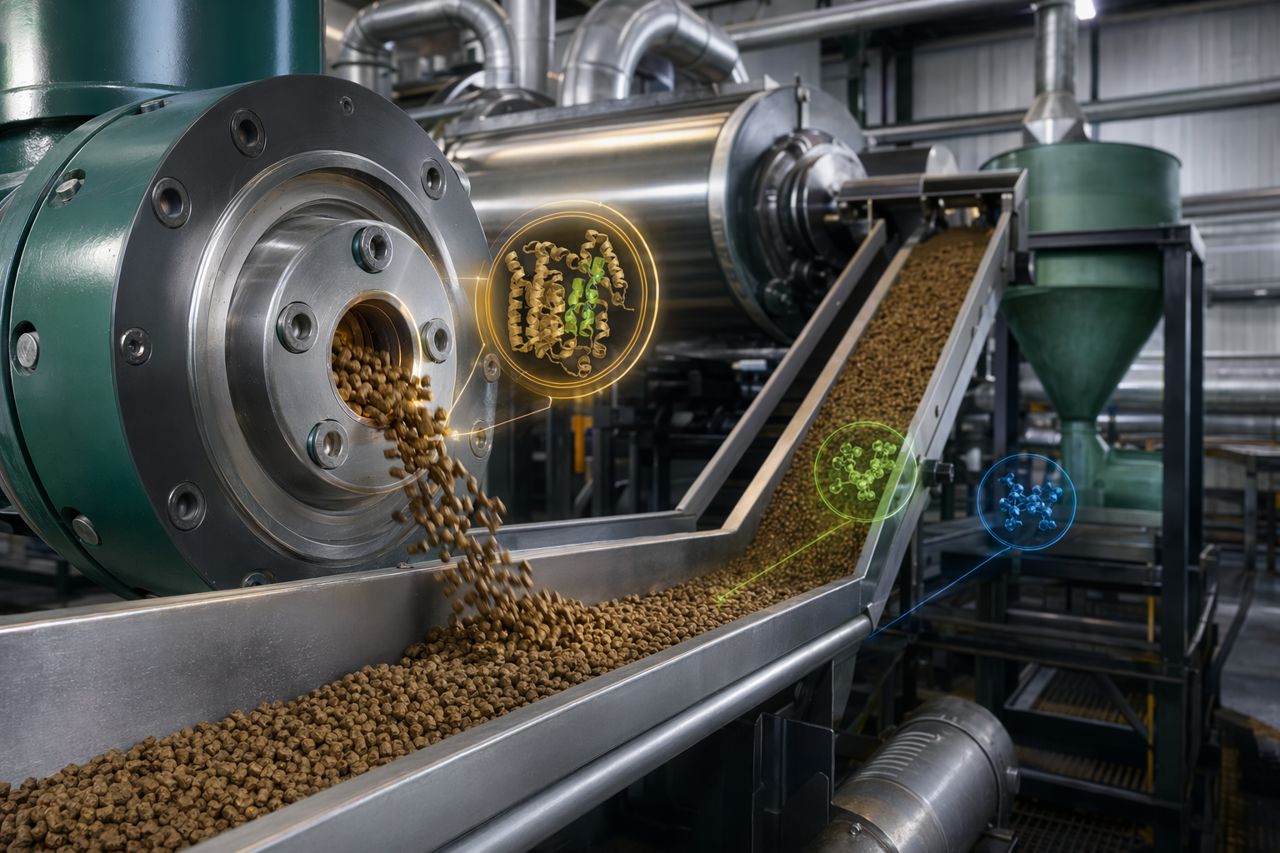
Extrusion changes the operating conditions for phytase. In mash or pelleted terrestrial feed, the enzyme mainly has to survive conditioning and pelleting. In extruded aquafeed, it may face higher moisture, longer residence time, intense shear, pressure change, drying, cooling, and fat coating. Those steps can reduce usable enzyme if the product form and application point are not selected carefully.
For nutritionists and technical directors, the question is not only whether phytase is present. The question is whether enough functional enzyme remains in the finished feed to release phosphorus from phytate under the animal’s digestive conditions.
Inosira supports phytase selection and inclusion strategy for feed manufacturers working with extruded feeds, aquafeeds, and high-value mineral-optimized diets.
Why extrusion is different for phytase
Extrusion is a high-energy process. It improves starch gelatinization, pellet expansion, water stability, and ingredient binding, but it also creates harsher enzyme exposure than standard meal mixing.
Key stress factors include:
Thermal load: barrel temperature, steam, die temperature, and dryer exposure
Moisture: water supports heat transfer and can accelerate enzyme denaturation
Shear and pressure: mechanical energy can disrupt enzyme structure
Post-extrusion drying: hot air drying can be more damaging than the extruder itself
Surface coating: oils and binders can affect enzyme distribution when applied after extrusion
The right phytase strategy depends on the full process, not a single temperature reading.
Application options in extruded feed
1. Pre-extrusion inclusion
Adding phytase into the dry mix before extrusion is operationally simple, but it exposes the enzyme to the full process. This route is only suitable when the enzyme form is designed for heat and moisture stress and when finished-feed performance is verified.
Pre-extrusion use may be considered when:
the extrusion profile is moderate,
the diet has limited post-extrusion liquid application capacity,
the manufacturer wants a single premix addition step,
retention has been validated under the site’s actual process conditions.
For many aggressive extrusion systems, pre-extrusion addition carries a higher risk of functional loss.
2. Post-extrusion liquid application
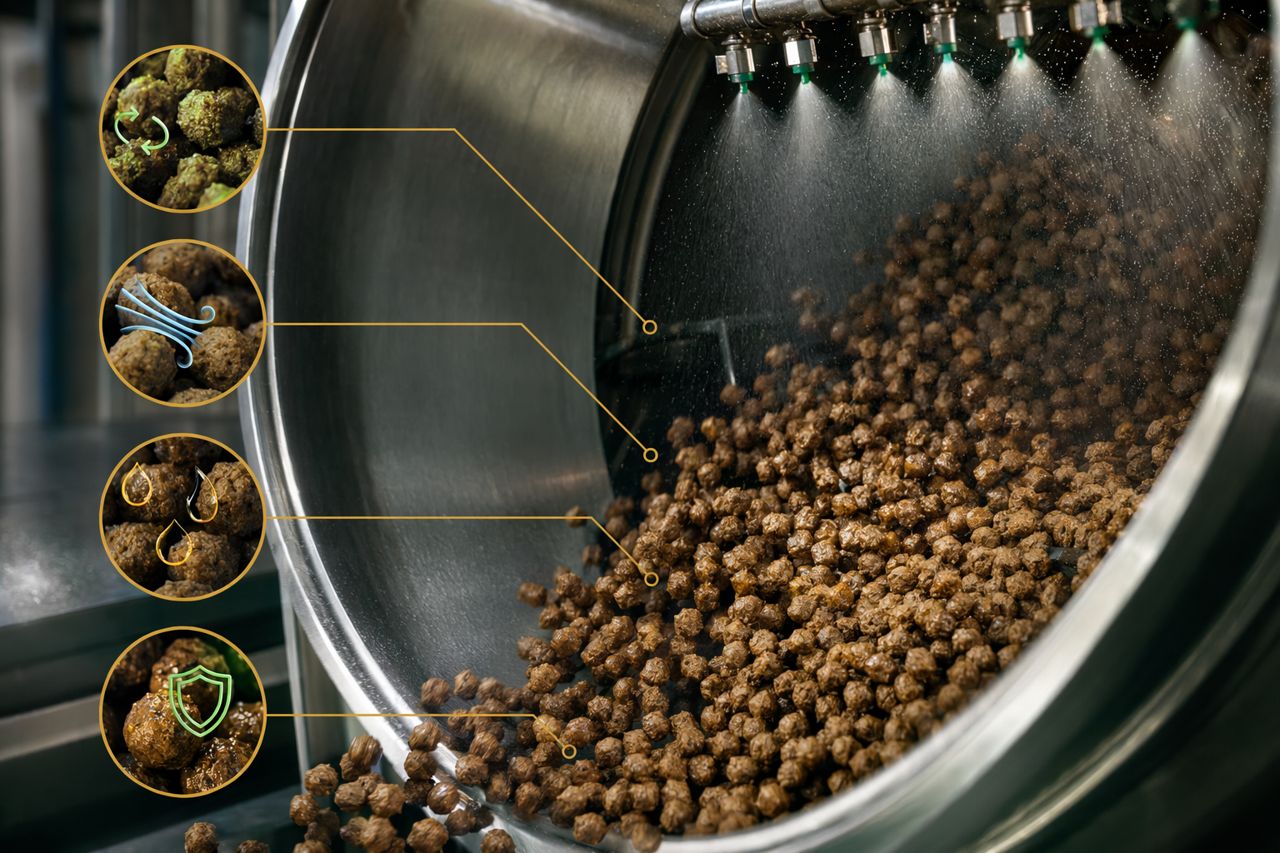
Applying phytase after extrusion, typically after drying and partial cooling, can reduce heat exposure. In aquafeed plants, this is often integrated with oil coating, vacuum infusion, or drum coating.
Post-extrusion application may improve functional retention when:
dryer exit temperatures are too high for direct application,
coating equipment provides uniform distribution,
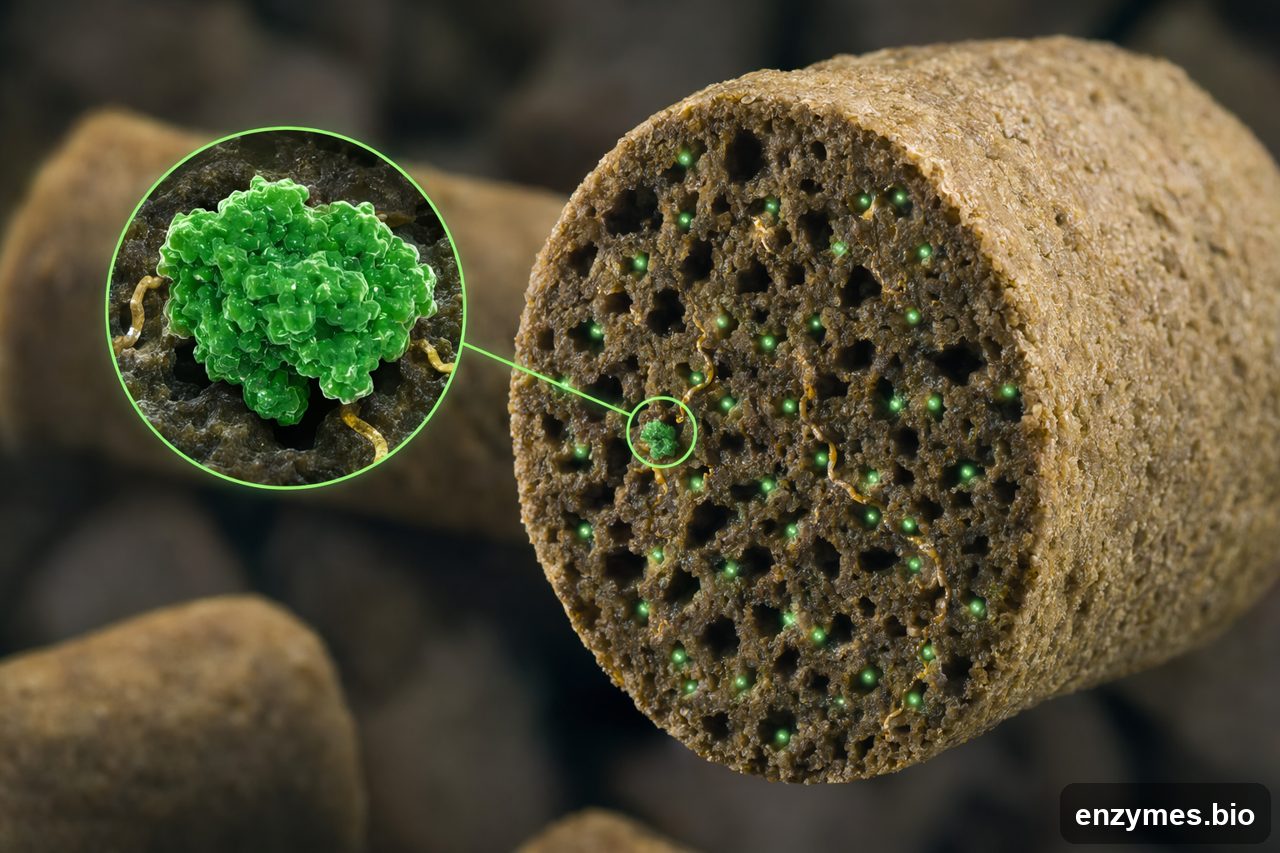
the feed surface or pellet porosity allows good uptake,
liquid handling, mixing time, and storage conditions are controlled.
This approach requires attention to coating order. Enzyme application should avoid excessive heat and should not be trapped in a way that limits digestive access.
3. Encapsulated or coated phytase forms
A protective coating can help shield phytase during handling and processing. However, protection must be balanced with release. A coating that survives processing but does not release effectively in the digestive tract can reduce nutritional value.
Selection should consider:
heat and moisture protection,
flowability in premixes and feed mills,
compatibility with minerals, organic acids, binders, and oil coatings,
release under gastric or upper intestinal conditions,
storage stability in finished feed.
Aquafeed considerations
Aquafeed adds another layer of complexity because species, feeding behavior, pellet type, and water stability all influence enzyme value.
Floating versus sinking feeds
Floating feeds often require greater expansion and lower bulk density, which can involve different thermal and shear profiles than dense sinking pellets. The process used to create buoyancy may influence enzyme retention and should be reviewed separately from standard livestock feed assumptions.
Water stability and enzyme placement
Aquafeed must remain intact in water long enough for consumption. If phytase is surface-applied, the formulation must limit enzyme leaching before ingestion. Binders, oil layers, and coating sequence can all affect how much enzyme remains associated with the pellet.
Species and digestive pH
Phytase performance is linked to where and when phytate is hydrolyzed in the digestive tract. Salmonids, shrimp, tilapia, carp, and marine fish can differ in gut pH profile, retention time, and mineral demand. Enzyme choice and matrix values should reflect the target species, not only the plant process.
Formulation value: what phytase is expected to deliver
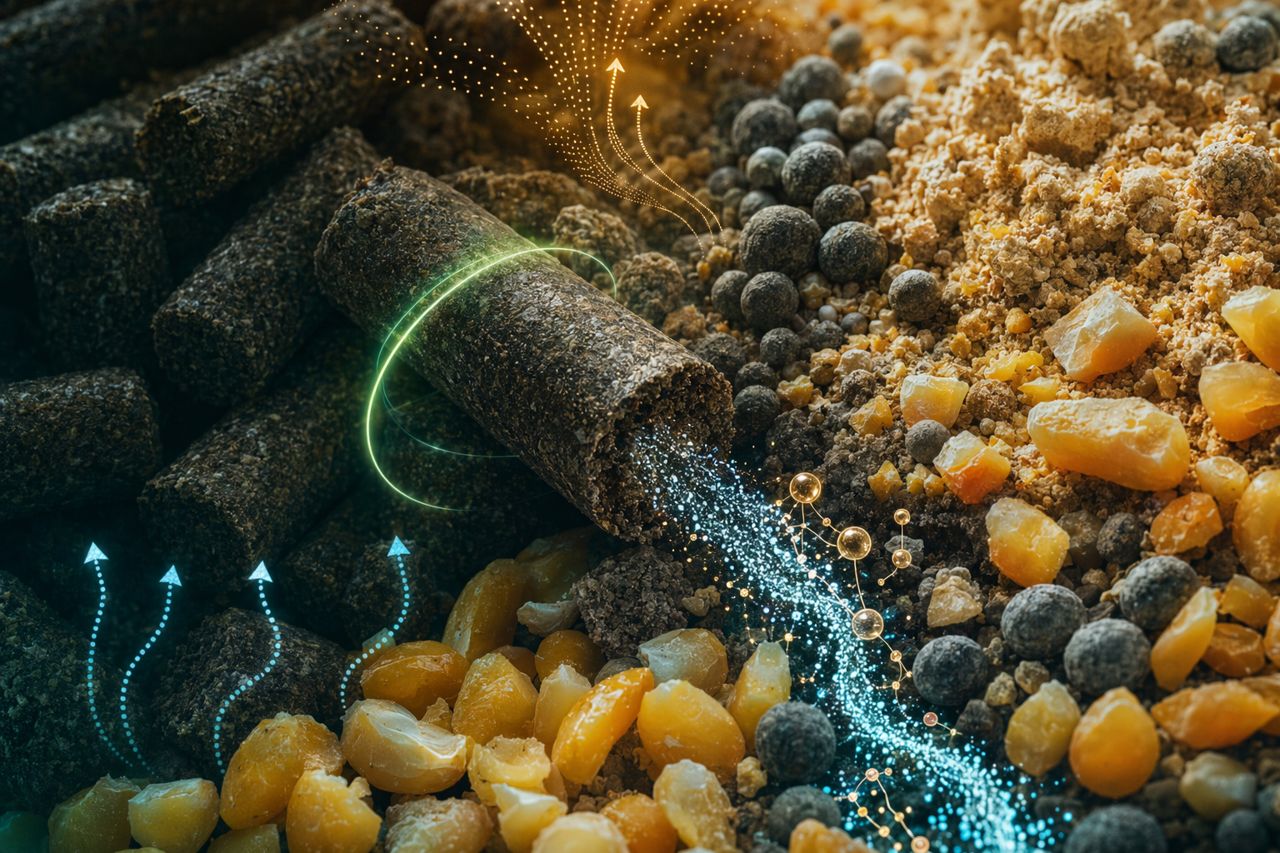
Phytate binds phosphorus and can also interact with calcium, zinc, trace minerals, protein, and starch digestion. In extruded aquafeed, where fishmeal reduction and plant protein inclusion are common, phytate management can support both cost control and nutritional consistency.
A properly selected phytase strategy can help feed manufacturers:
release more plant-bound phosphorus,
reduce dependence on inorganic phosphate sources,
support skeletal mineralization and growth performance,
improve mineral efficiency in plant-forward diets,
reduce phosphorus discharge into water systems,
improve the formulation value of soybean meal, canola meal, rice bran, wheat middlings, corn coproducts, and other phytate-containing ingredients.
The economic value depends on ingredient prices, available phosphorus assumptions, target species, processing conditions, and the verified performance of the enzyme in finished feed.
Processing variables to review before selecting phytase
For extrusion applications, Inosira recommends reviewing the process map before setting a phytase specification.
Useful plant-level inputs include:
ingredient mix and phytate contribution,
preconditioner temperature and moisture,
extruder barrel profile,
die temperature and pressure behavior,
dryer inlet and product exit temperature,
cooler performance,
fat and liquid coating sequence,
vacuum coating settings if used,
finished feed moisture and water activity,
storage time and packaging environment,
target animal species and feeding phase.
This information helps determine whether pre-extrusion, post-extrusion, or protected-form application is the most practical route.
Quality checks that matter
For B2B procurement and technical teams, the focus should be finished-feed performance and lot-to-lot consistency.
Recommended checks include:
confirmation that the selected phytase form matches the processing route,
finished-feed retention review under the plant’s real conditions,
uniformity assessment across coated or mixed batches,
storage stability review over expected distribution time,
compatibility with acids, minerals, oils, binders, and premix components,
formulation matrix alignment with species, diet type, and processing conditions.
Avoid relying only on supplier literature generated under different temperatures, different equipment, or non-aquafeed matrices.
Practical guidance by scenario
High-temperature floating aquafeed
Use caution with pre-extrusion inclusion. Post-dryer application or a protected form is often more appropriate. Confirm coating uniformity and limit leaching risk.
Sinking feed with moderate expansion
Both protected pre-extrusion and post-extrusion routes may be viable, depending on dryer conditions and oil addition capacity. Validate under actual production settings.
Plant-protein-rich aquafeed
Phytase can create stronger value where soybean meal, canola meal, wheat products, rice bran, or other phytate-rich materials are used at meaningful inclusion levels. Matrix assumptions should be conservative until confirmed.
Feeds with heavy oil coating
Application sequence matters. If phytase is applied after oil, distribution may be inconsistent. If applied before oil, the oil layer may help retention but could influence release. Test the actual coating order.
Procurement questions to ask
Before sourcing phytase for extrusion or aquafeed, ask suppliers for answers that match your process:
Is the product intended for pre-extrusion, post-extrusion, or both?
How does the product handle combined heat, moisture, and shear?
Is the enzyme form suitable for liquid coating, dry premix, or protected inclusion?
What compatibility limits apply with acids, minerals, oils, and binders?
How should the product be stored before use?
What finished-feed validation support is available?
How should formulation matrix values be adjusted for the target species and process?
The best procurement decision is not simply the lowest cost per kilogram. It is the lowest verified cost per unit of nutrient release in the finished feed.
Inosira approach
Inosira positions phytase as a processing-aware nutrient release tool, not a generic additive. For extruded feed and aquafeed, we support selection around three commercial requirements:
Survivability: enough functional enzyme remains after the actual process.
Availability: the enzyme releases phosphorus where the animal can use it.
Formulation value: mineral replacement and sustainability claims are backed by realistic assumptions.
If your plant is changing extrusion settings, increasing plant protein, reducing inorganic phosphate, or moving from pelleted feed into aquafeed, phytase should be reviewed before the diet is locked.
Request pricing or technical support
Use the form below to request pricing, documentation, or a process-specific recommendation for phytase in extruded feed or aquafeed.