How to Choose a Phytase Format for Feed Manufacturing
Compare dry granular, coated, liquid, and premix-compatible phytase formats for feed mills, integrators, and nutrition teams. Practical criteria for process fit, formulation value, handling, and purchasing.
Phytase is purchased for nutrient release, but it succeeds or fails in the plant. The right format has to survive your process, distribute evenly, support your formulation matrix, and fit the way your operators actually run the line.
This guide is for nutritionists, feed formulators, procurement teams, and technical directors evaluating phytase before purchase. It focuses on format selection rather than enzyme theory, so you can match the product form to your feed system with fewer assumptions.
Format is a process decision, not a catalog decision
Phytase format influences four commercial outcomes:
Recoverable nutrient value: consistent release of phosphorus and associated nutrients after manufacturing.
Formulation confidence: how aggressively nutrition teams can apply matrix values without creating performance risk.
Plant reliability: dosing accuracy, flowability, dust control, segregation risk, and compatibility with pelleting or liquid application.
Total cost in use: not just price per kilogram, but delivered value after storage, handling, application, and process loss.
A low-cost format can become expensive if it requires rework, causes dosing variability, limits formulation credits, or does not match the mill layout.
The main phytase formats
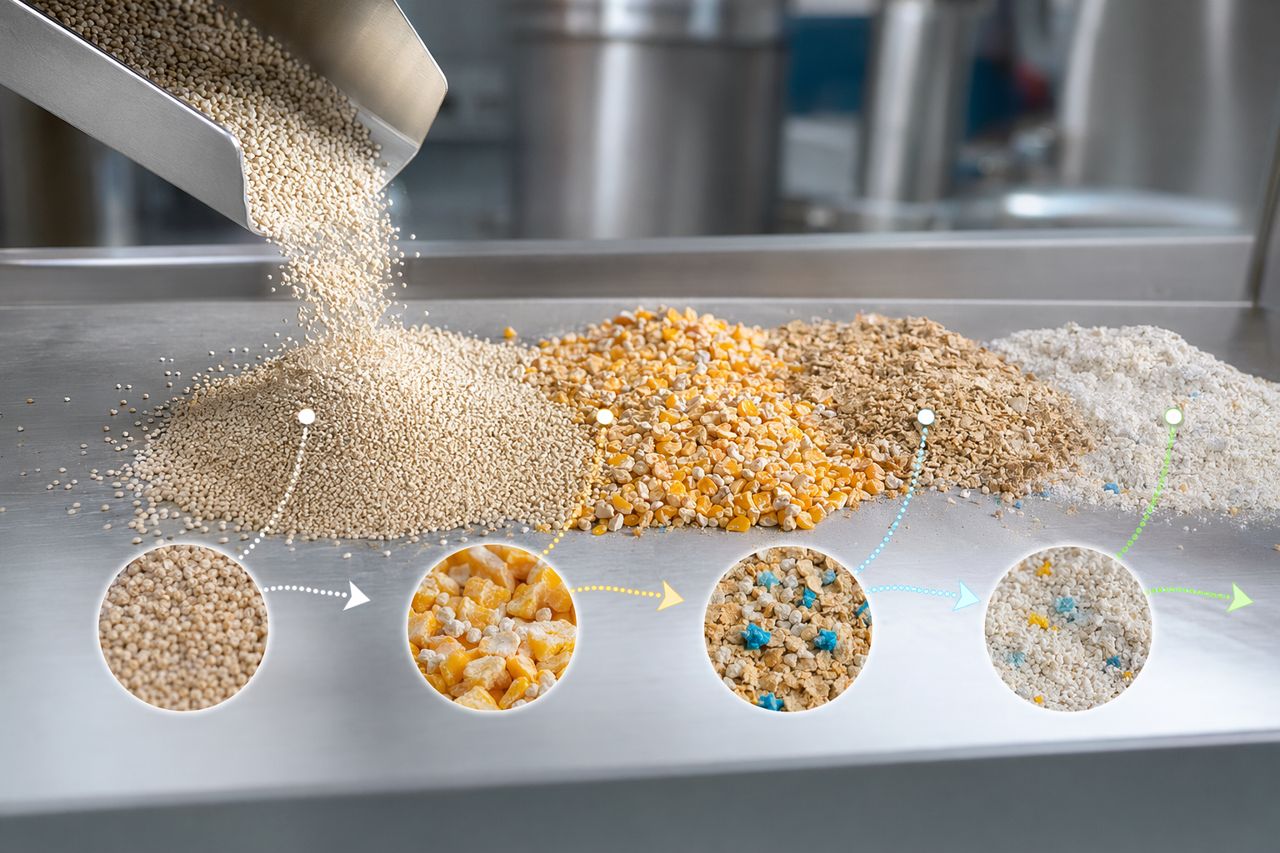
1. Dry granular phytase
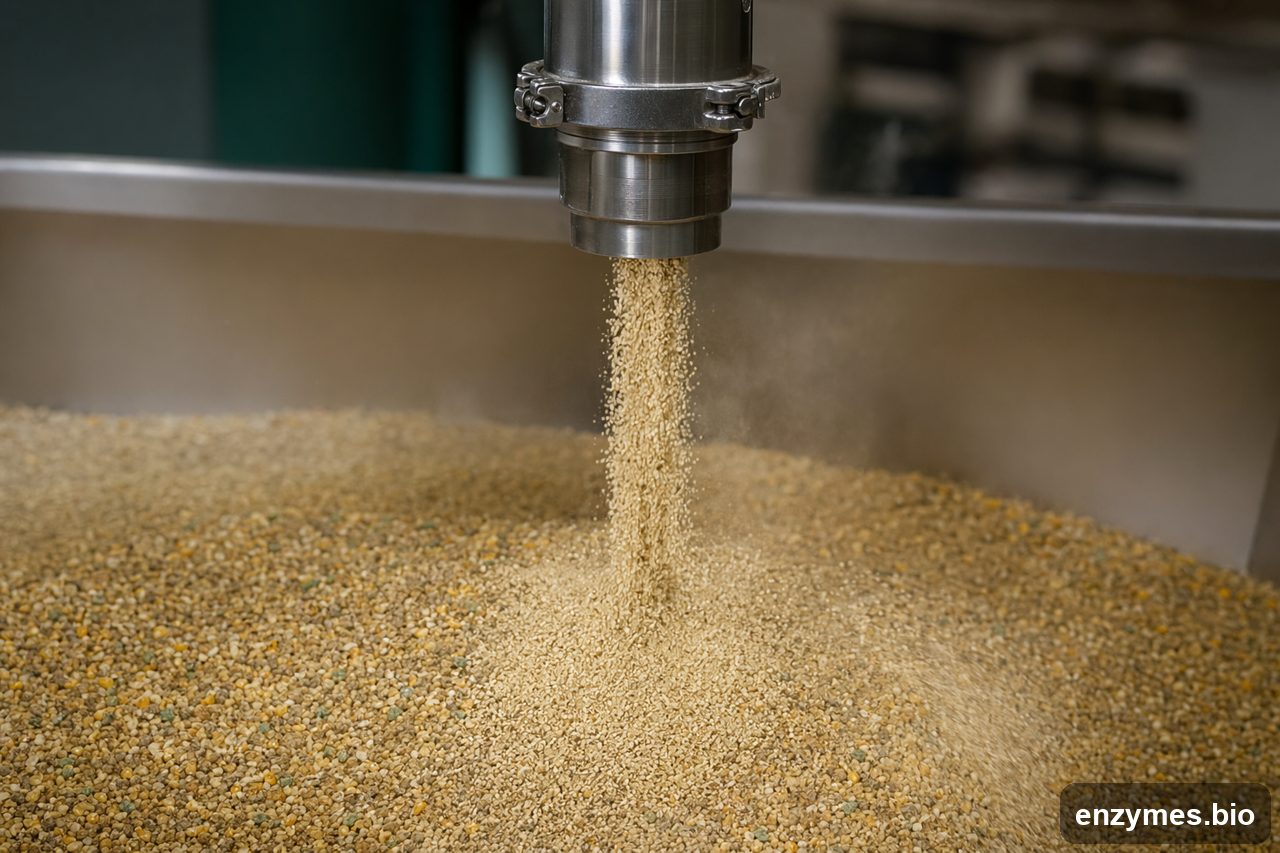
Dry granular phytase is typically selected when the feed mill wants a simple solid ingredient that can be dosed through existing micro-ingredient systems.
Best fit
Mash feeds or moderate processing conditions
Mills with reliable micro-dosing equipment
Operations that prefer solid ingredient inventory
Formulas where uniform distribution through the mixer is well controlled
What to check
Particle size compatibility with the premix or feed base
Dust level during handling and transfer
Segregation risk in premixes, mash feeds, or long conveying systems
Storage stability under your warehouse temperature and humidity range
Commercial note: dry granular formats can be efficient when the process is gentle and dosing infrastructure is already in place. They need careful evaluation when pelleting severity is high or when ingredient segregation is a known issue.
2. Thermostable or coated dry phytase
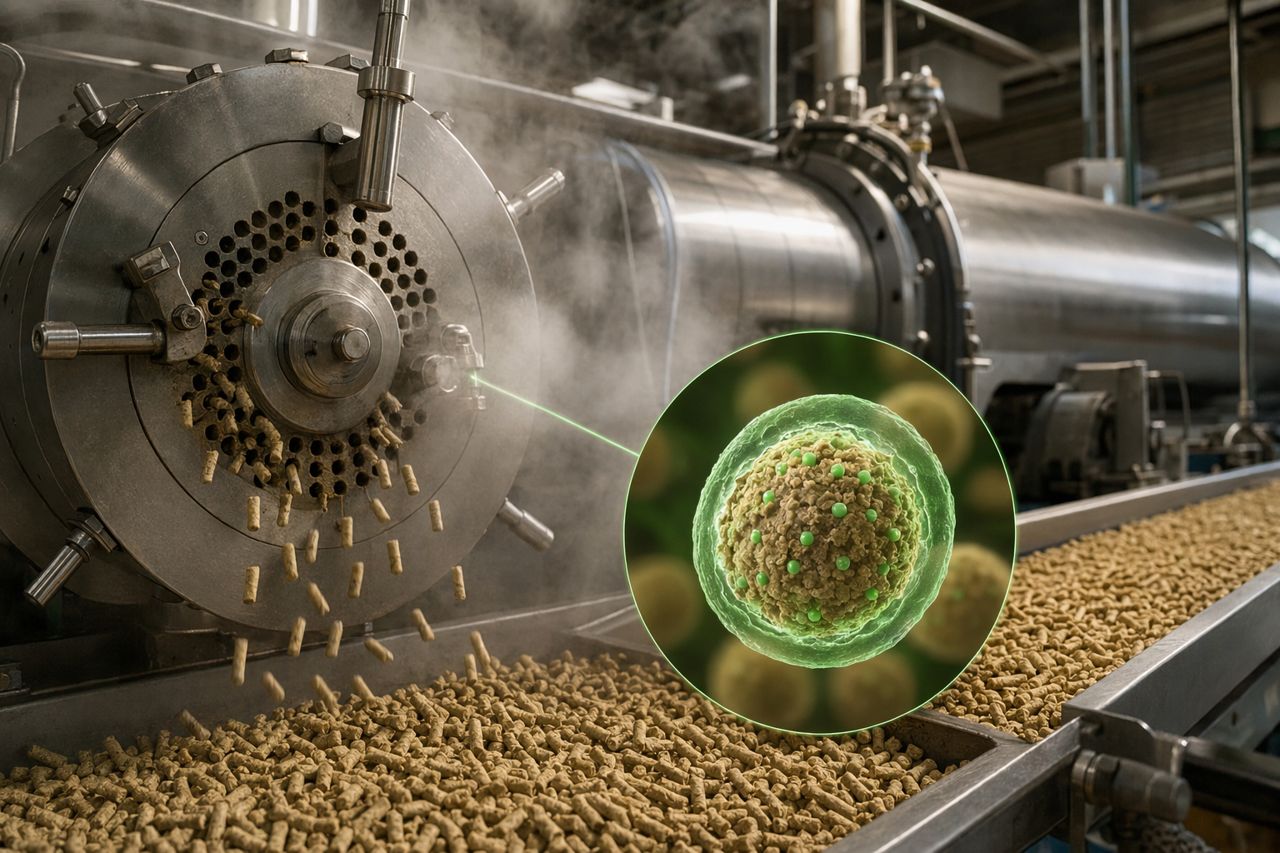
Thermostable and coated dry formats are designed for pelleted feed systems where heat, steam, pressure, and friction can reduce enzyme recovery.
Best fit
Pelleted feed lines
Conditioning and pelleting processes with meaningful thermal stress
Plants that do not have post-pellet liquid application
Integrators seeking one solid format across multiple feed mills
What to check
Recovery after your actual pelleting conditions, not only generic supplier claims
Whether the coating protects the enzyme without delaying nutrient release in the animal
Flowability through your micro bins and screw feeders
Compatibility with mineral premixes, acids, binders, and other functional additives
Commercial note: coated formats can protect value during pelleting, but they should be assessed against your own conditioning profile, residence time, pellet mill load, and cooling performance. The right question is not whether the product is heat stable in general. The right question is whether it remains commercially dependable in your process.
3. Liquid phytase for post-pellet application
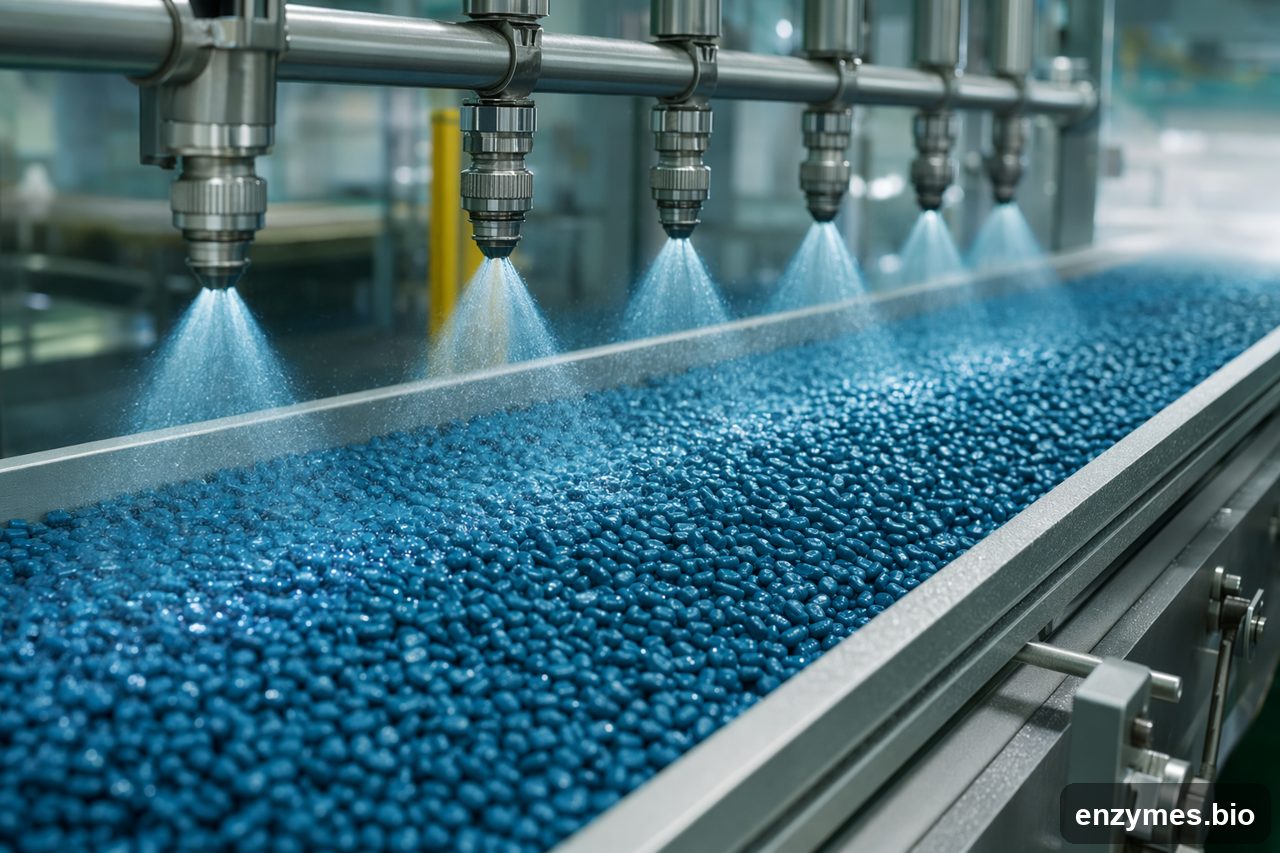
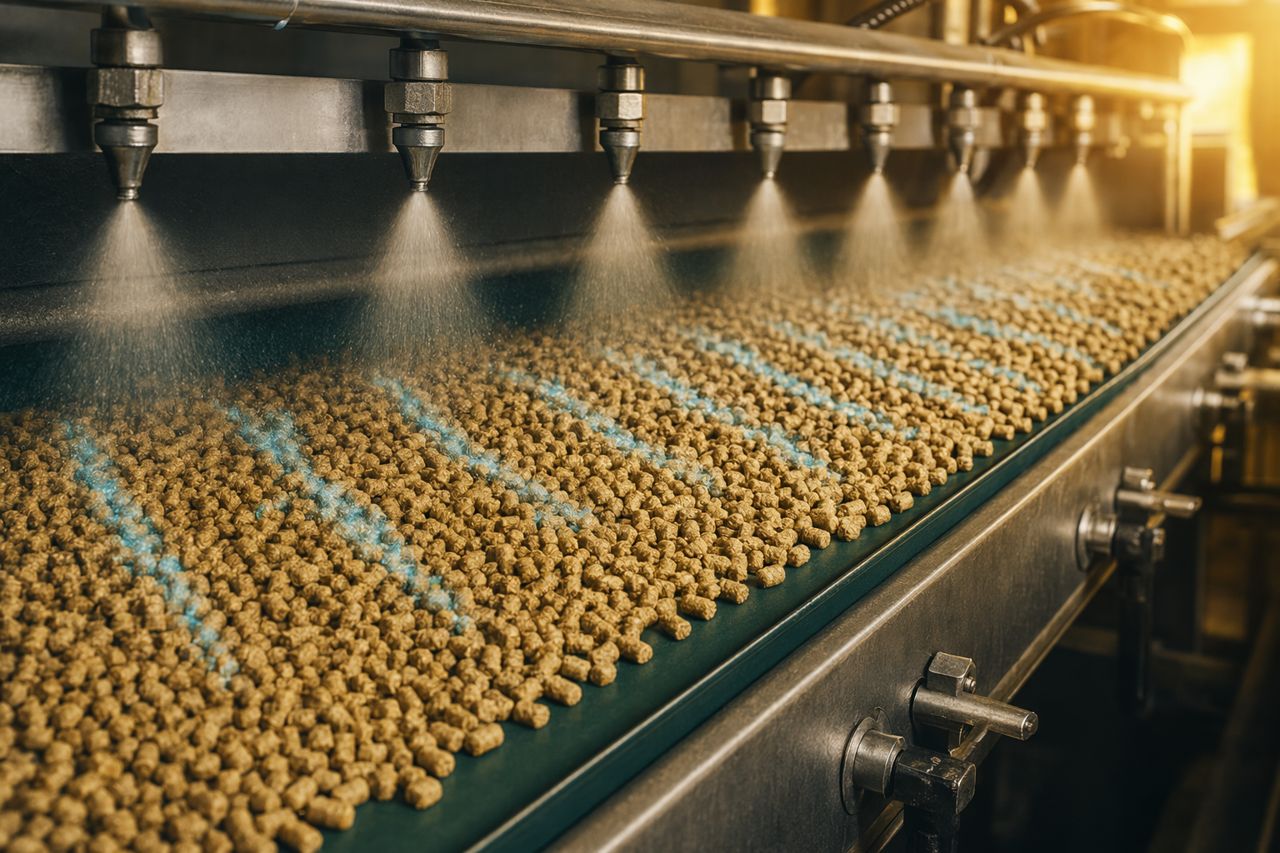
Liquid phytase is commonly used when the mill applies enzyme after pelleting, avoiding the highest thermal stress points in the process.
Best fit
Feed mills with accurate liquid application systems
High-throughput pelleting lines where heat exposure is difficult to reduce
Operations wanting flexibility across pelleted products
Plants with good spray coverage, calibration discipline, and mixing after application
What to check
Spray uniformity across pellet surface area
Nozzle maintenance and calibration frequency
Holding tank agitation, temperature control, and hygiene
Compatibility with other liquids applied on the same line
Risk of under-application during start-up, shutdown, or flow interruptions
Commercial note: liquid formats can protect enzyme recovery by moving application downstream, but they shift the control point from pelleting to application accuracy. A strong liquid program depends on equipment, maintenance, and operator discipline.
4. Premix-compatible phytase formats
Some buyers need phytase to move through a premix, mineral blend, or concentrated additive system before reaching the final feed. In this case, compatibility is the first selection filter.
Best fit
Premix manufacturers
Centralized additive blending operations
Feed groups that distribute concentrated blends to multiple mills
Systems that need stable dispersion before final feed manufacture
What to check
Interaction with trace minerals, organic acids, salts, and choline sources
Time between premix manufacture and feed production
Carrier selection, particle distribution, and blend uniformity
Packaging barrier performance in humid or high-temperature storage
Commercial note: premix handling can simplify procurement and dosing, but it can also expose phytase to reactive ingredients for longer periods. Stability in the actual blend matters more than stability in isolation.
A practical selection matrix
Your process condition
Format direction to evaluate first
Key risk to control
Mash feed, low heat exposure
Dry granular phytase
Segregation and dosing accuracy
Standard pelleting with moderate stress
Coated or thermostable dry phytase
Recovery through conditioning and pelleting
Severe pelleting or variable heat profile
Liquid post-pellet phytase or high-protection dry format
Application uniformity or process recovery
Multiple mills with different equipment
Format strategy by mill type
Over-standardizing at the expense of value
Premix distribution before feed manufacture
Premix-compatible dry format
Stability with minerals and reactive additives
Limited micro-dosing capacity
Liquid system or concentrated dry solution
Calibration, inclusion control, and operator workflow
Questions to answer before requesting pricing
Before comparing offers, align your internal team on these points:
Where will phytase enter the process? Micro bin, mixer, premix, liquid skid, or post-pellet applicator.
What is the most severe condition it will face? Heat, moisture, residence time, friction, reactive ingredients, or extended storage.
What nutrient credits will the nutrition team use? Available phosphorus, calcium adjustment, and broader nutrient release assumptions should match the enzyme evidence and your risk tolerance.
How will the plant verify application control? Calibration routines, batch records, inventory reconciliation, and retention samples should be practical for the mill.
What is the real cost benchmark? Compare cost against delivered nutrient value and process reliability, not only against purchase price.
Procurement factors that change the decision
Phytase buying is often framed as a nutrition decision, but procurement can materially affect the outcome.
Evaluate suppliers on:
Batch-to-batch consistency and documentation
Packaging integrity for your climate and warehouse conditions
Lead time reliability and safety stock options
Technical support during plant trials and scale-up
Clear recommendations for storage, handling, and application
Ability to support both nutrition and operations teams with the same technical position
If the supplier cannot explain how the format behaves in your process, the quoted price is incomplete information.
Red flags during format evaluation
Pause the purchase decision if you see any of these issues:
The same format is recommended for every mill, regardless of equipment or heat profile.
Only headline enzyme concentration is discussed, with little attention to recovery or application control.
The proposed format is not tested in a blend close to your real premix or feed system.
Operators report bridging, dusting, poor spray pattern, or frequent recalibration during trial use.
The nutrition matrix is more aggressive than the process data can support.
Commercial comparisons ignore shrink, rework, downtime, or rejected feed risk.
How Inosira approaches phytase format selection
Inosira treats phytase as a process-integrated nutrient release tool. The recommended format depends on your species program, diet type, feed form, pelleting profile, ingredient base, and plant constraints.
A typical technical review covers:
Feed type and species segment
Mash, pellet, crumble, or premix route
Conditioning and application points
Micro-dosing or liquid system capability
Storage climate and inventory turnover
Target formulation credits
Packaging and delivery requirements
The goal is a format that protects nutrient value while staying practical for operators and commercially defensible for procurement.
Request pricing or a format recommendation
Share the process details you already have. Inosira can help narrow the suitable phytase format before you request a commercial offer.